
English| EUR
Suggested for you
More currencies
Choose a language
Venice has no cars, no buses and no bicycles inside the historic centre — only stone, water and bridges. This Is Venice Walkable guide sets out how the six sestieri link up on foot, where the Grand Canal forces detours, and what slows walkers down. Practical detail, not reassurance.
Quick answer
Yes. Venice is one of Europe's most walkable cities: the historic centre is entirely car-free, open 00:00–23:59 every day, and free to enter at 0 EUR. Walking is the default way to move. The caveat is vertical, not horizontal — the route between any two points crosses stepped bridges, and an Access Fee is only active on specific dates during peak season.
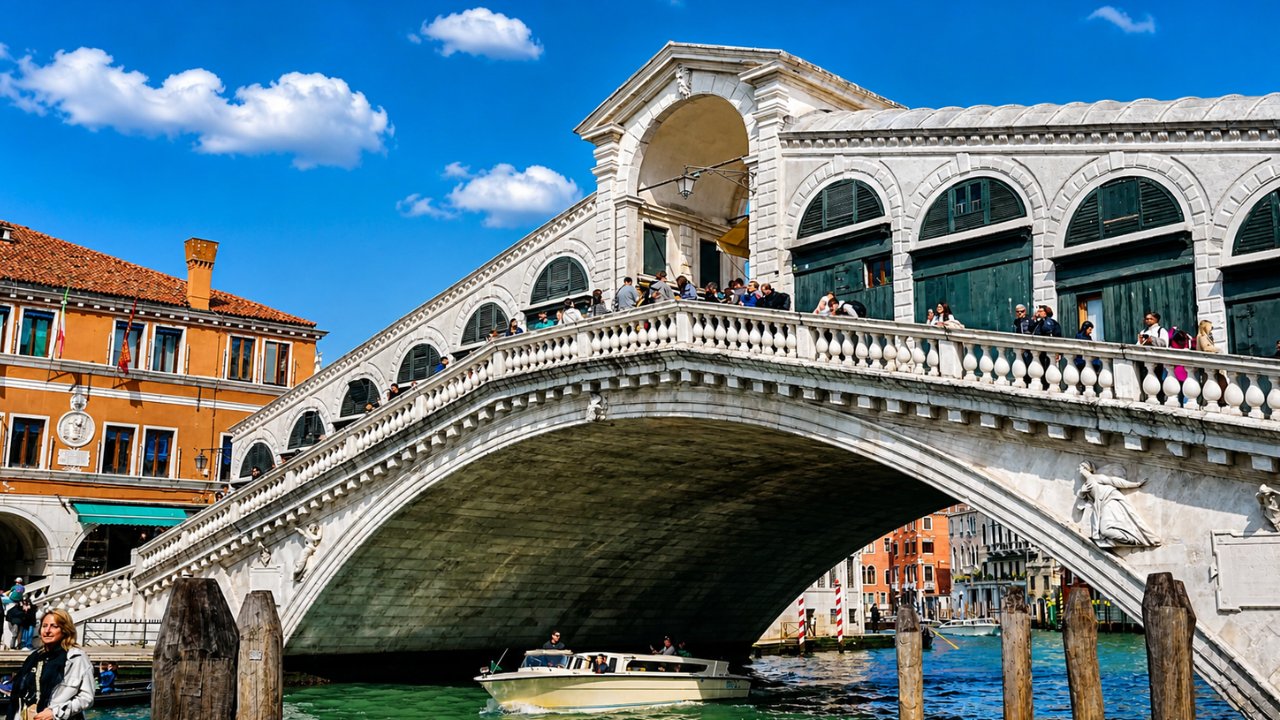
No private car has entered central Venice in generations. Vehicles stop at Piazzale Roma; bicycles are banned beyond it; everything else moves on foot or by water. That single rule reframes the question. Is Venice walkable? The city is not merely walkable — walking is its road network. The Historic City Center, Venice, Italy functions as one continuous pedestrian surface of calli, campi and fondamente, and it never closes: the streets stay open 00:00–23:59, seven days a week. Two features complicate the picture. First, only four bridges cross the Grand Canal — the Ponte degli Scalzi, the Ponte della Costituzione, the Rialto and the Accademia — so a destination visible across the water can sit a long detour away on foot. Traghetto gondolas shorten a few of those crossings. Second, almost every bridge is stepped, which matters more to luggage and wheels than to legs. Addresses follow sestieri rather than streets, so Cannaregio numbering tells a walker little about where to turn. Painted wall signs reading Per Rialto and Per San Marco remain more reliable than a phone, since GPS drifts between tall buildings and dead-end courtyards. Season changes the surface, not the layout. Autumn brings acqua alta to the lowest pavements, and the city raises timber walkways across Piazza San Marco when tides run high; the Zattere and the Dorsoduro fondamente drain faster. Both are seasonal inconveniences, not barriers. Crowds, not geography, are the other variable — the corridor between the railway station and San Marco carries most of the day's foot traffic, while San Polo and Castello stay quiet an alley away. Most visitors therefore plan by bridges and sightlines rather than kilometres. A structured Venezia a piedi itinerary, or a guided Venice walking tour, does the navigation work and strings the landmarks into one route; the quietest hours for either fall in the early arrival window of 06:00–08:30. Shoes with grip matter on worn Istrian stone, and a vaporetto pass is a useful fallback for the long leg home rather than a replacement for the walk. Asked plainly, is Venice walkable in a single visit? Yes — provided the walker accepts that the shortest line between two points in this lagoon city is almost never straight.
“Walking is not an option in Venice; it is the road network.”
Venice presents significant physical accessibility challenges due to its extensive network of stone bridges, stairs, and narrow calli. While the city center is pedestrian-only, navigating the historic infrastructure often requires careful route planning.
Many areas are limited by bridges with steps, though some routes offer ramps.
Designated accessible paths exist but require advanced planning to navigate around stairs.
Limited availability exists in specific public buildings and some transport terminals.
Facilities are located at key points, though they are not present on every street.
Tactile paths and auditory signals are provided in specific high-traffic areas.
Venice is located in the Historic City Center, accessible primarily via land transport hubs that transition directly into pedestrian routes. Once you reach these arrival points, walking serves as the primary way to navigate the city.
Venezia Santa Lucia station to city center
ATVO or ACTV to Piazzale Roma
Parking at Piazzale Roma or Tronchetto
Vaporetto Line 1 or 2 from station
The best arrival window is 06:00–08:30 to avoid peak crowds and heat. Arriving at Venezia Santa Lucia or Piazzale Roma provides immediate access to the walking network of the Historic City Center.
Venice's car-free layout makes walking the only way to explore, but the city's 400+ bridges and narrow alleys catch unprepared visitors off guard. These mistakes turn a manageable walk into an exhausting ordeal.
Bringing wheeled luggage across bridges
Leave large suitcases at your accommodation or use water taxi services directly to your hotel. The constant lifting over bridge steps will drain you before you start exploring.
Wearing new or unsupportive shoes
Break in footwear weeks before your trip and choose shoes with arch support and cushioning. You'll cover 15,000–25,000 steps daily on uneven stone pavement.
Ignoring the 06:00–08:30 arrival window
Arrive early to walk without crowds blocking narrow passages and before midday heat makes long distances grueling. Afternoon arrivals mean navigating packed tourist routes with your energy already depleted.
Underestimating walking distances between landmarks
Central Venice spans roughly 3 km end-to-end, but winding alleys and bridge detours double actual distances. Budget 20–30 minutes between major sites, not the 10 minutes a map suggests.
Skipping water and rest stops
Carry water and plan breaks every 60–90 minutes, especially in summer. Dehydration combined with constant walking leads to fatigue that cuts your day short.
Walking throughout the historic city center of Venice is free of charge. Access fees are only active on specific dates during peak season.
Verdict: A typical adult pays 0 EUR, though an access fee may apply depending on the specific date of your visit.
Everything you need to know about is venice walkable
Yes, Venice is primarily a pedestrian city, making it highly accessible for those who prefer to traverse narrow alleyways and bridges on foot. Determining if venice walkable fits your travel style depends on your comfort with navigating stone paths and occasional steps.
When planning your Venice walking tour, keep in mind that the city is composed of a complex labyrinth of streets and canals. Many visitors find that exploring Venice by foot is the most authentic way to experience its unique atmosphere and historic architecture.
The official entry fee is 0 EUR, though an Access Fee may apply on specific dates during peak season. Always check official sources to confirm if your travel dates require this additional preparation before you begin your journey.
To ensure the most comfortable experience, the best arrival window is 06:00–08:30. Arriving early allows you to explore while the city is quieter and the temperatures are more manageable, proving that the question of is venice walkable is best answered in the early morning.
Navigating the historic city center is straightforward if you have a reliable map and comfortable footwear. Since the streets are vehicle-free, the area is considered entirely pedestrian-friendly, confirming that is venice walkable is a practical query for any traveler.
While the city is pedestrian-oriented, those with mobility concerns should note that many bridges feature stairs that can impact how easily is venice walkable for every individual. Consider mapping your route in advance to avoid steep inclines and enjoy a smoother path through the local districts.